

Different types of grips and how to choose them
Functional fitness is an intense and versatile sport that uses a wide range of equipment. One of the most important pieces of gear in CrossFit training is a pair of grips, which protect your palms and improve your hold on the bar. With the right grips you can train effectively – and, above all, you won't hand your rivals a head start in competition! In this post we cover the different types of grips and what to consider when choosing them. We also look at how different grip materials perform on different bars.
Explore the different models here.
Models
Grips used in functional fitness can be divided into a few types based on their design and purpose:
1. Traditional grips – No Holes!
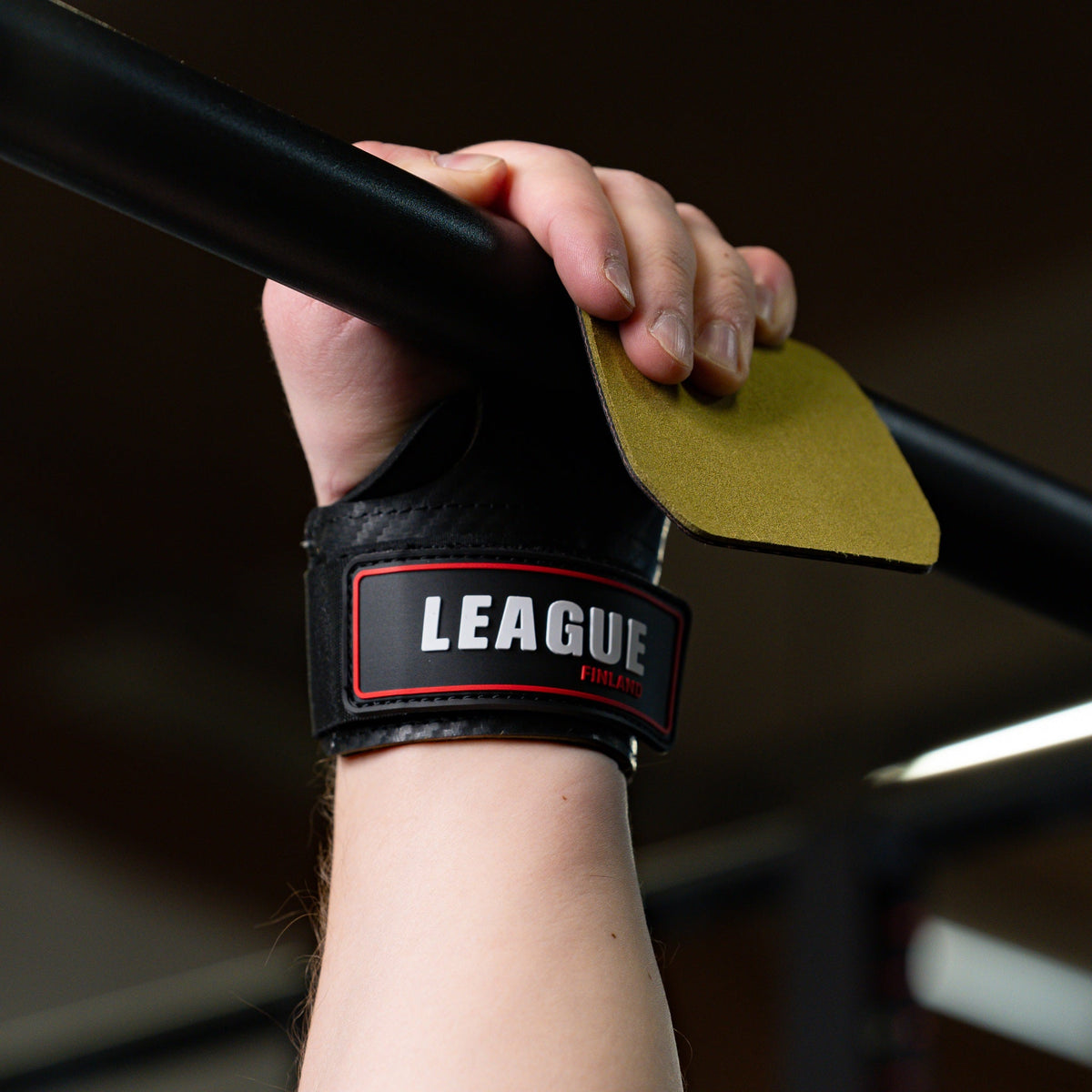
Traditional grips cover only the area between the fingers and the palm, leaving your fingers free. They are light and breathable and protect your palms well, reducing friction and blisters. If a workout includes several movements, you can flip the grip onto your palm whenever you take hold of the bar and turn it to the back of your hand for e.g. wall balls, so it never gets in the way. Most of the grips League Finland sells are no-hole models – you can see it in our range, where they are the largest group.
Pros
- + Quick transitions between movements
- + No chafing on the fingers
- + Lots of material options for different bar types
2. Grips with finger holes – With holes
Some grips have pre-made finger holes, usually three. The holes make sure the grip always stays where it should – protecting your palm. You can also get a little creative with finger-hole grips: many of these models are long enough to fold over at the fingers. This creates a thicker section near the fingers that helps you hang on to the bar a bit better. Some finger-hole grips can also be used without putting your fingers through the holes.
Pros
- + Excellent protection
- + Stays in place
What to consider when choosing grips
When choosing grips for training, keep the following in mind to get the most out of your performance:
1. Material
The material has a major impact on comfort, durability and grip. The most common materials are leather, synthetics and the recently very popular rubber-surfaced grips. Rubber grips give a noticeable boost in grip on clean, chalk-free bars. Some competitions have banned rubber grips precisely because of the extra grip they provide – so check the rules if you're qualifying for an event.
Leather: Leather is durable and offers excellent grip, but it may need some breaking in before it moulds perfectly to your hand. Leather grips are usually slightly thicker and protect well, but they can be less breathable than other materials.
Synthetic: Synthetic materials such as carbon are light and quickly mould to your hand. Synthetic grips work well with chalk and are often more comfortable in long workouts. League's RX Carbon is a good example – and unlike other carbon grips, it's worth trying without chalk too. You might be surprised!
2. Fit and size
It's important to choose the right size so the grip fits your hand well. A grip that's too small won't protect your hand and adds discomfort, while one that's too big often gets in the way and can feel clumsy.
League grips typically come in two sizes, L and XL. The difference is in length: XL is usually about 1 cm longer than L.
Picsil offers sizes G and G+, where G+ is the larger one and fits adult hands, whether bigger or smaller. League only stocks Picsil grips in size G+.
The Victory Grips Tactical is the longest grip we carry, and it is also the thinnest grip sold at League.
How different materials perform on different bars
Different materials behave differently on different bars, and their grip and durability can vary depending on the bar's coating and knurling.
Steel bars are the most common bars in functional fitness and CrossFit, and they offer good grip for most materials. Leather and synthetics work well on steel bars, providing the grip and durability you need when using chalk. Rubber grips work on both smooth and rough steel bars without chalk.
Summary
Grips are an essential part of your training gear, protecting your palms and improving your hold on the bar. When choosing grips, consider the material and the size. Which grips are the best? Different materials perform differently on different bars, so it pays to try a few options to find the grips that suit you best. We hope this guide helps you make the right choice and improve your performance in training.
In competition, the right grips can save your event! Here's the feedback we got at Wodka Throwdown:

